By Chloe Learey, Executive Director, published in Vermont Biz Magazine, August 23, 2026
Vermont has no shortage of conversations about housing.
We talk about zoning, permitting, construction costs, infrastructure, interest rates and the need to build more homes. We talk about the workers who cannot find affordable places to live and the employers who cannot recruit or retain them.
All of those conversations are important.
But after working to develop workforce housing in Brattleboro, I have come to believe that there is another issue we need to discuss more directly: Capital.
Vermont needs housing, but we also need new ways to finance the housing we know we need to build.
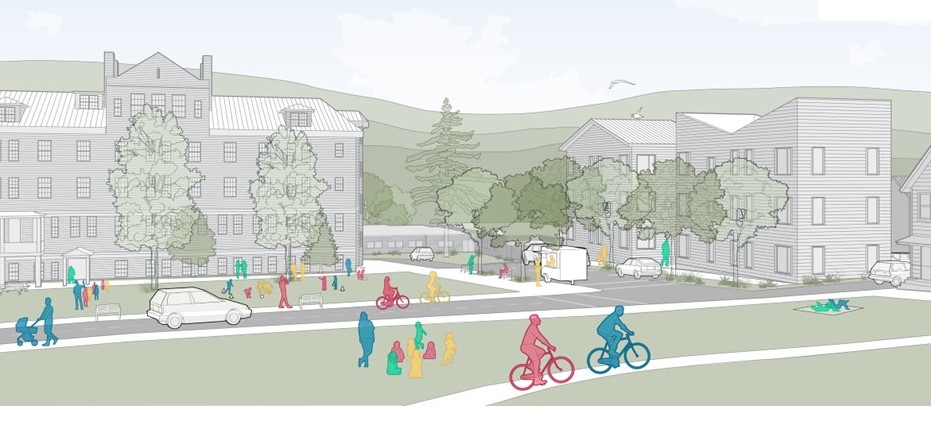
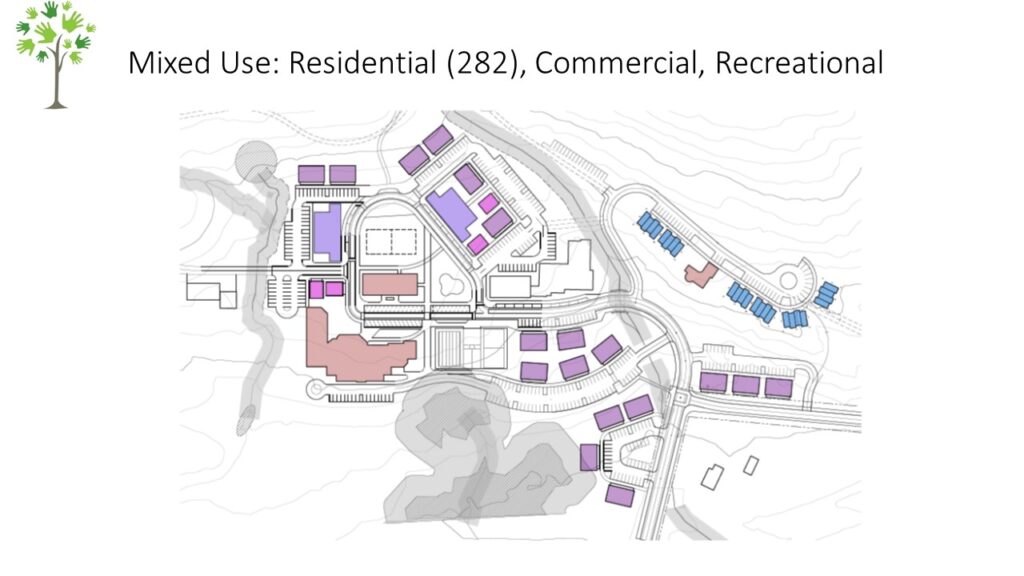
At Winston Prouty, we have experienced this challenge firsthand. The Village at Winston Prouty is a planned workforce housing development on our 184-acre campus in Brattleboro. Its first phase will create 30 new homes, with rents targeted to households earning approximately 80% to 120% of area median income. The $9.5 million project has brought together nonprofit leadership, state investment, private financing, philanthropy and community support.
The $4 million commitment from Vermont Treasurer Mike Pieciak’s Invest in Vermont program was a major step forward. The program provides low-interest financing intended to make projects possible when conventional borrowing costs would otherwise make them difficult or impossible to finance. The state recently expanded the program, making an estimated $25 million more available for housing and economic development.
That investment illustrates something important about Vermont’s housing challenge: the public sector can play a catalytic role by reducing the cost of capital and helping projects attract additional investment.
But public investment alone cannot meet Vermont’s housing needs.
The state’s housing shortage is simply too large.
That is where impact investing can play an important role.
Impact investing is different from philanthropy. An investor puts capital into a project with the expectation of receiving a financial return, while also intentionally seeking a measurable social or community benefit.
For housing, that can mean investing in projects that provide reasonable returns while creating homes for working Vermonters.
The concept is not new. Organizations such as Evernorth have demonstrated how mission-driven investment capital can support affordable and workforce housing across northern New England. Vermont has also increasingly used public investment to leverage private capital and move housing projects forward.
The opportunity now is to build on that experience.
Housing should be viewed as economic infrastructure.
When a nurse cannot afford to live near a hospital, the problem is not simply an individual affordability problem. It becomes a workforce problem for the hospital.
When a childcare provider cannot find housing, it affects the availability of childcare for other workers.
When a teacher, restaurant employee, skilled tradesperson or small-business worker cannot afford to live in the community where they work, the consequences ripple throughout the local economy.
Housing and economic development are inseparable.
That is particularly true in smaller Vermont communities, where employers may not have access to the enormous pools of capital available in larger metropolitan markets.
A project can have a compelling location, strong community support and clear demand—and still struggle to close its financing.
This is why we need to think of impact capital as part of the housing toolbox.
It does not replace government programs. It does not replace conventional bank financing. It does not eliminate the need for zoning reform, infrastructure investment or efforts to reduce construction costs.
Instead, it can fill gaps.
At Winston Prouty, we are exploring how investors who care about Vermont’s future can put capital to work in a project that creates both a financial return and a tangible community benefit.
The first phase of The Village at Winston Prouty is modest in size. Thirty homes will not solve Brattleboro’s housing shortage, much less Vermont’s.
But the financing model could have implications beyond those 30 homes.
If we can demonstrate that public investment, private capital, philanthropy and nonprofit development can be brought together to make workforce housing financially viable, other communities may be able to adapt similar approaches to their own circumstances.
That is the larger opportunity.
Vermont is already beginning to recognize that traditional approaches alone will not produce the number of homes we need. The expansion of Invest in Vermont is one example. The state has reported that the program has already supported more than 1,700 housing units and more than 140 permanent jobs, demonstrating how public capital can be used to leverage development and economic activity.
The next step is to bring more private and mission-driven capital into that equation.
There is an important distinction between asking investors to make charitable contributions and asking them to invest in Vermont’s future.
The first depends on generosity.
The second recognizes that solving a major economic problem can also create a legitimate investment opportunity.
Vermont needs both.
We need public investment that lowers barriers and attracts additional capital. We need financial institutions willing to develop creative financing structures. We need philanthropic organizations willing to take risks that traditional investors cannot. And we need impact investors willing to accept a reasonable, patient return in exchange for helping create the housing and communities Vermont needs.
Most of all, we need to stop thinking about housing as an issue that belongs to one sector.
Housing is a business issue. It is a workforce issue. It is an economic-development issue. It is an issue for employers, investors, nonprofits, municipalities and state government.
The question is no longer whether Vermont needs more housing. We know the answer.
The question is whether we are willing to find new ways to finance it.
At Winston Prouty, we are betting that the answer is yes.